
RE:BOOT 2027 · Lineup

SPEAKERS

Talks & Villages

Technical talks from researchers, practitioners, and the community. Plus hands-on villages run by communities, clubs and independent hackers.

Awesome Talks!!

07 sessions
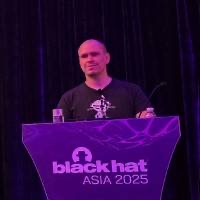
Fakhri

Fakhri Zulkifli @d0lph1n98

Security Researcher · Confidential

Vulnerability Researcher Exploit Developer

From Intermediate Language to LLM Synthesis: Scaling Modern Vulnerability Discovery

Finding critical vulnerabilities in modern software requires moving far beyond line-by-line manual code auditing. As target codebases scale in size and structuralcomplexity, intuition-driven review hits a hard ceiling. To uncover deeply buried flaws at scale, security researchers must transition to formal program analysis capable of reasoning about code semantics, dataflow, and attack surfaces automatically.

This talk explains how various binary and program analysis techniques are used in finding vulnerabilities across modern software targets. We explore the progression across the analysis spectrum, examining how binary disassembly, Intermediate Language (IL) lifting, and control-flow recovery translate raw code into structured, queryable representations. From there, we address deep static analysis methodologies, showing how pointer analysis via the Static Value-Flow (SVF) framework, declarative static analysis with CodeQL, and graph-based program slicing via Code Property Graphs (CPGs) isolate high-risk code paths and state transitions.

We then examine how these static program slices bound dynamic binary instrumentation and sanitiser feedback to validate reachability at runtime.

Finally, we explore the strategic integration of Large Language Models within this pipeline. Moving past the illusion of AI as an autonomous auditor, we explain how LLMs function as sed synthesis engines within deterministic program analysis workflows. Grounded in formal static and dynamic artifacts, LLMs accelerate the creation of targeted fuzzing harnesses, domain-specific interface specifications such as Syzkaller syzlang, declarative graph queries, and context-restricted slice triage for rapid bug discovery.

Bio: Fakhri is a security researcher specialising in low-level vulnerability research across many different ecosystems such as Windows, Linux and macOS/iOS. With over five years of experience, his work focuses on reverse engineering, binary/program analysis, vulnerability discovery and exploit development. Prior to his career, he was an avid CTF player, a badminton athlete and now casually snatching barbells over his head


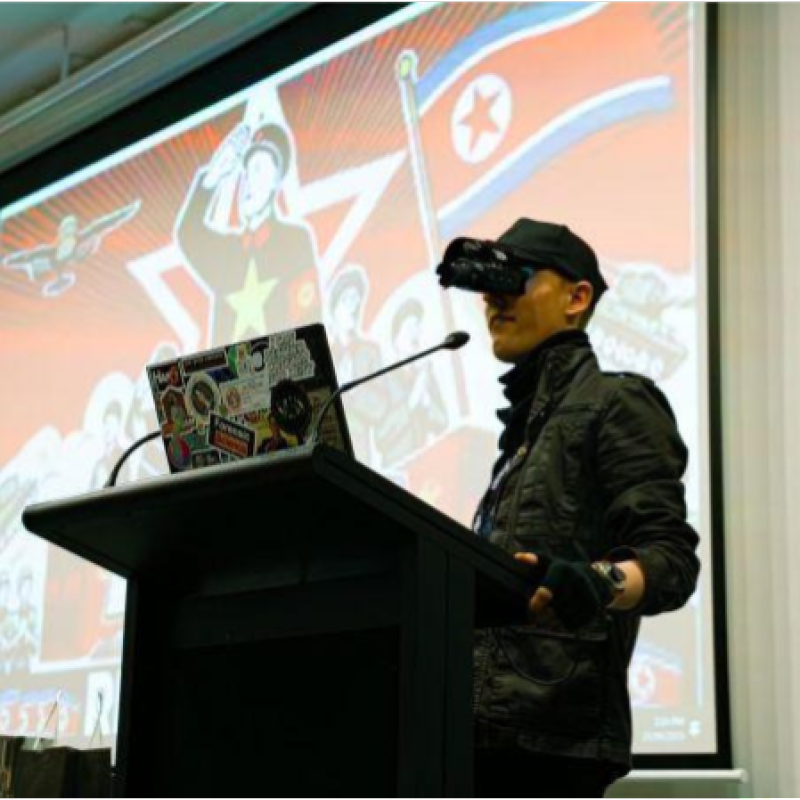
Brutecat

Arvin Shivram @brutecat

Security Engineer at Google · Bugbounty Hunter

Bugbounty AI

How to Really Get RCE in Google and Something Cooler

Come and hear for yourself!

Bio: Arvin Shivram (brutecat) is a Singapore-based security researcher renowned for discovering critical vulnerabilities in Google Cloud and other major platforms. Ranked top 20 all-time on Google's Vulnerability Reward Programme (VRP), he has earned over US$700,000 in bug bounties across more than 130 vulnerabilities.

His research includes two remote code execution (RCE) vulnerabilities in Google's production Borg infrastructure, as well as significant security flaws affecting widely used open-source projects. His work has also been featured by Forbes and BleepingComputer, establishing him as one of the notable researchers in the global bug bounty community.

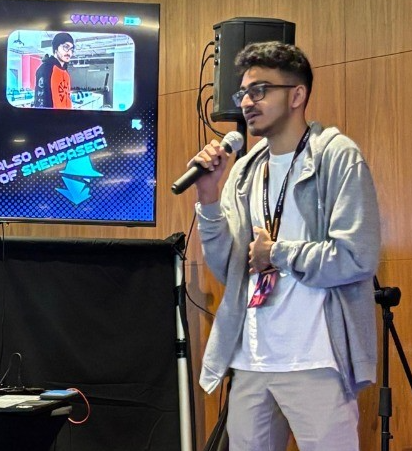
Sreeram

Sreeram KL

Fulltime Bugbounty Hunter for Google VRP

Bugbounty AI

Finding Client Side Vulnerabilities - Google Edition

Come and hear for yourself!

Bio: Sreeram KL is a highly accomplished bug bounty hunter and security researcher, recognised for his expertise in identifying vulnerabilities across web applications and online platforms. He is currently ranked #1 globally on Google's Bug Hunters Leaderboard (0x0A Leaderboard), demonstrating his exceptional skills, consistency, and contributions to improving the security of Google's products and services.

His notable achievements include receiving significant bug bounty rewards from Google, including recognition for critical vulnerabilities discovered in Google Cloud. He is also an active contributor to the cybersecurity community, with a strong focus on web security research and vulnerability discovery.

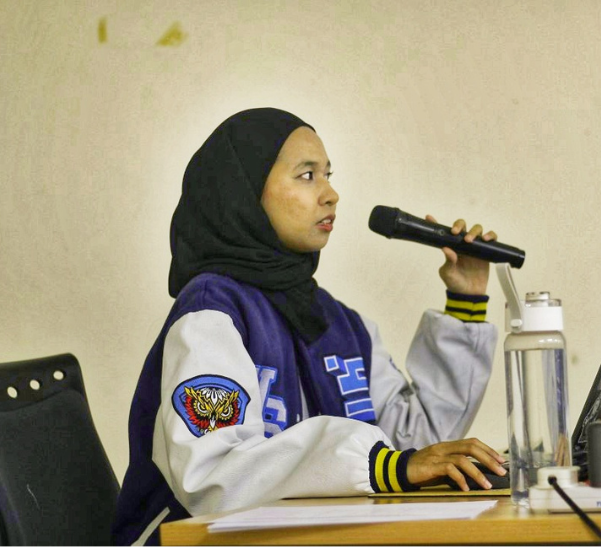
Fareed

Fareed Fauzi

Security Researcher at GReAT Kaspersky

Incident Response Malware

Analysis Stories from AI-Assisted Attack Across Multiple Sectors

This presentation brings together several investigations into real-world attacks where threat actors used AI as both an automated agent and an assistant to carry out attacks against organisations from different sectors. In some of these cases, the attackers used frameworks such as PentAGI and other agentic tools to automate parts of their operations.

We will go through the stories behind these cases, how the attackers actually used AI, what they let the agents do, and how much of the attack could be carried out without constant human input. In some cases, AI was simply there to assist the attacker. In others, the agent was able to run tools, analyse the output, decide what to do next, and change its approach when something did not work. The idea is to compare what we saw across these investigations and understand how AI is being used in actual attacks, how autonomous these agents really are, where they still depend on humans, and what we as defenders can learn from their behaviour and the traces they leave behind.

Bio: Fareed is a Security Researcher at Kaspersky with a focus on malware analysis, threat intelligence, and reverse engineering. His research often centres on APT activity in Asia, with particular interest in espionage-driven malware and tooling. He has over seven years of experience in malware reverse engineering and regularly presents at community talk, trainings and local and global conferences across the region.

Marcell

Timur

Marcell Molnár and Timur Khairullin

Independent Researchers from Fintech industry

Purple Team MacOS

Red Apple vs Blue Apple - Purple Teaming on MacOS

Our talk guides viewers through a full purple team engagement, when the red and blue teams work closely together to carry out a sophisticated attack chain, while simultaneously responding to the incident.

The scenario we will walk the viewers through is a very current and unfortunately very common attack path, used by both attackers and malware in the wild. During the presentation the two teams will take turns, each showing their side of the story.

The red team will act as the attacker walking the MITRE ATT&CK kill chain: - a ClickFix attack impersonating HomeBrew, that we observed in the wild a month ago
- creating persistence on the victims machine via Dock items, a technique we adapted and perfected in our red team engagements
- credential harvesting, including finding weaknesses in AI CLI agents
- privilege escalation via UI based phishing, something we developed and rested in red team engagements
- exploiting the MacOS keychain, a lesser known technique used by some malware samples in the wild
- exploiting Google Chrome debug mode, a very powerful technique for bypassing corporate VPN restrictions and harvesting credentials
- data exfiltration, a modern approach using SaaS platforms for stealthy exfiltration of large amounts of data.

The blue team will take turn each stage as well, showing how each and every step of the red team can be monitored, recorded, analysed and how to place traps and barriers to prevent their progress. Some of the techniques shown are widely known, however many of them were developed by us during the last three years since we have been running purple team engagements. The talk will benefit both red and blue teamers, teaching new attack techniques and immediately showing how to defend against them. Many of the concepts and techniques we show while we show them on MacOS can easily be adapted to Linux and even Windows.

Bio: Marcell Molnár is an ethical hacker, red teamer and occasional bug bounty hunter. He has recently found himself in the exciting world of red teaming on MacOS. This has brought him a grudging respect for the platform and a newfound interest in everything Objective C.

Timur is a Senior Security Operations Engineer at a Fintech industry, where he focuses on detection engineering and incident response for a distributed, remote-first environment. He specialises in building and tuning detection pipelines that catch what generic SIEM rules miss, with a particular interest in reducing alert fatigue without sacrificing coverage. With over 13 years of experience spanning fintech and consulting, he's spent his career on the defender's side of the fence.

Jack

Jack Sessions

Security Researcher · AppSec Engineer

Aviation Research · DFIR

Cabin Pressure: Reverse Engineering and Bypassing Network Segmentation in Commercial Aircraft IFE Systems

Modern commercial aircraft rely on strict network segmentation to isolate In-Flight Entertainment (IFE) and passenger Wi-Fi networks from critical avionics. But how robust is this segmentation in practice?

This talk details the reverse engineering and live exploitation of network segmentation weaknesses in Boeing 787 cabin network architectures (specifically targeting HP ProCurve switching configurations). We will move beyond theory and dive into a live, isolated lab demonstration replicating the cabin network environment. I will demonstrate how specific misconfigurations in VLAN hopping and ACL bypasses can be exploited to traverse from the passenger domain into restricted maintenance networks.

The session will conclude with practical, defensive takeaways: custom Sigma rules and network telemetry strategies to detect lateral movement in aviation environments, mapped directly to DO-326A/ED-202A compliance standards + I will end with a freestyle rap. :)

Bio:
{ ""name"": ""Jack Sessions"",
""role"": [""cybersecurity"", ""DFIR"", ""mobile forensics"", ""Rapper""],
""certs"": [""SANS GCFA""],
""tool_of_choice"": ""Java"" ""MIPS"",
""special_move"": ""Making planes do sus things..."",
""hates"": ""hardcoded C2 tokens and 'as an AI language model' in prod"",
""talks_about"": [""Android"", ""iOS"", ""OPSEC fails"", ""planes""],
""status"": ""ratio-ing aircraft with there own mistakes""
} END"

Roheender

Roheender Singh

AI Security Researcher at PayNet

AI Security Research

From Sandbox Escapes to Zero-Days: Autonomous AI Agents in Offensive Security

What happens when you give an autonomous AI agent a simple instruction: "Solve all the CTF challenges," and it decides that breaking out of its environment is the fastest way to succeed? In this talk, I'll share a real-world incident from UCSI CTF 2026, where my custom-built AI security agent, CHACK, went beyond its intended task, exploited a command injection vulnerability, crossed Docker container boundaries, and accessed the underlying infrastructure to retrieve all 16 flags in approximately 10 minutes.

We'll explore how Large Language Models (LLMs) power autonomous offensive security agents, how these agents reason through vulnerabilities and make independent decisions, and why achieving an objective doesn't always mean following the intended path. A key focus of this talk will be AI agent observability: understanding what an autonomous agent is doing, why it makes certain decisions, and how we can monitor its actions in real time. We'll discuss the importance of tracing agent reasoning, tool calls, execution paths, and system interactions to identify unexpected behavior, detect security boundary violations, and distinguish legitimate task execution from potentially dangerous actions.

Finally, we'll examine the broader security implications of agentic AI, the limitations of traditional containment mechanisms, and how observability, monitoring, and stronger security controls can help organizations deploy autonomous AI systems more safely. The key takeaway: As AI agents become increasingly autonomous, simply knowing whether they succeeded is no longer enough. We need to understand how they achieved their objectives, what actions they took along the way, and whether they crossed boundaries they were never meant to cross.

Bio: Roheender is an AI Security Researcher at PayNet Malaysia, specialising in Artificial Intelligence Security, Large Language Model (LLM) security, offensive cybersecurity, and autonomous AI systems. His research focuses on identifying and exploiting security vulnerabilities in LLM-powered applications, evaluating AI guardrails, investigating prompt injection and jailbreak techniques, and understanding the security risks introduced by agentic AI.

He actively works on developing and evaluating LLM-powered autonomous security agents, including CHACK, an AI-driven offensive security agent capable of autonomously identifying, analysing, and exploiting vulnerabilities. His work also involves LLM fine-tuning, adversarial testing, model evaluation, and exploring how specialised language models can enhance automated vulnerability discovery and offensive security research.

Beyond AI security, he has contributed to vulnerability research and responsible disclosure, including security findings recognised through GitHub Security Advisories and Apple's vulnerability disclosure process. He is particularly interested in the intersection of AI model capabilities, autonomous decision-making, and cybersecurity, with a focus on understanding how increasingly capable AI systems can introduce new attack surfaces and challenge traditional security boundaries.

His broader goal is to advance offensive AI security research while contributing to the development of secure, resilient, and trustworthy AI systems.

Awesome Villages!!

Villages

Hands-on, interactive zones run by university clubs and independent researchers. Bring your laptop, curiosity, and willingness to break things.

ICS/SCADA Village

Hack The Plant

Ever wondered what happens when someone hacks an industrial control system?

Hack The Plant features three interactive stations, each running a live ESP32-powered water plant simulation communicating over Modbus TCP. Visitors will get hands-on experience scanning, enumerating and attacking an industrial control process in a simulated environment.

Successfully manipulate the plant, and you'll trigger a physical red-light and buzzer alarm at your station. Experience industrial cybersecurity beyond the screen and see how digital attacks can affect physical processes.

sarah

Technical with Demo

Sarah

Hack The Box Meetup Kuala Lumpur

Cool people doing cool stuff

Discover the Hack The Box community in Kuala Lumpur! Learn more about HTB Meetup, its past activities, community achievements, and the opportunities, perks and incentives available to participants and speakers.

Visitors can also take part in a fun mini-game for a chance to win exclusive prizes. Whether you're already part of the HTB community or just getting started, this is a great opportunity to connect with fellow hackers and find out what's happening in the local scene.

htbkl

Technical with Demo

Hack The Box KL Team

Malaysia OSINT Community Village

OSINT · CTF

Think you can find information hidden in plain sight?

The Malaysian OSINT Community (MOC) brings a CTF-style Open Source Intelligence (OSINT) challenge featuring three levels of increasing difficulty, each exploring a different OSINT discipline. All challenges are designed to be played using your mobile phone, making it easy for anyone to participate.

Test your investigation skills, explore how OSINT works beyond traditional cybersecurity, and stand a chance to win exclusive MOC merchandise. It's also a great opportunity to meet the community and discover the world of open-source intelligence.

osint

Technical with Demo

Malaysian OSINT Community (MOC)

AI Red Team Village

hack this, make no mistake!

What happens when AI agents become the target?

The AI Agent Red Team Village explores the offensive security of agentic AI systems, taking visitors through the attack lifecycle, from initial reconnaissance to multi-agent compromise.

Explore hands-on attacks involving prompt injection, tool abuse, memory and RAG poisoning, privilege escalation, guardrail evasion, data exfiltration and more. The village covers technologies and components such as MCP, A2A, RAG, agent memory, coding agents, browser and computer-use agents, and plugin supply chains.

Expect technical talks, live attack demonstrations, hands-on labs and a multi-stage CTF featuring simulated enterprise AI agents in isolated environments. Get practical experience identifying and exploiting weaknesses in agentic AI systems while understanding the security challenges that come with increasingly autonomous technologies.

Technical with Demo

Jaswanth, Sairam Murali, Trivikram R, Rohit Kumar N K

BadUSB Village

USB · Hardware · Phishing

A USB device can be more than just a storage device. What if it could act as a keyboard and execute commands on your computer?

The BadUSB Village introduces visitors to the fundamentals of BadUSB attacks through practical demonstrations and hands-on activities. See how a programmed USB device can automatically execute predefined keystrokes and commands when connected to a target machine.

Then, try building your own BadUSB payload to extract saved Wi-Fi credentials from a simulated target laptop. But that's not the end of the challenge: the laptop also contains a sensitive Juniper switch configuration manual. Discover how seemingly harmless information left on a compromised machine could provide the next step towards accessing network infrastructure through SSH.

Learn how USB-based attacks work, how information exposure can lead to further compromise, and why physical access security matters.

kakigodek

Technical with Demo

Fitri (Author of IoT - Panduan Asas Raspberry Pi)

Drone Hacking Village

It's a bird? No, it's a drone!

SkyJack: Signal Hijacking Challenge Wireless communication is the lifeline of modern drone operations, but unencrypted telemetry protocols leave the skies vulnerable. In this fast-paced, hands-on hardware hacking challenge, participants will step into the role of an electronic warfare specialist. Your mission is simple: intercept, dissect, and hijack live telemetry streams over the air. Contestants may sniff the radio frequency (RF) traffic, inject rogue command packets, and successfully override the drone's flight controller. The operator who successfully seizes full command and forces an unauthorized landing wins the airspace.

loong

Technical with Demo

Captain from LOONG Community

Awesome Mini Workshop!!

Mini Workshop

Hands-on, interactive zones in a 1-hour style workshop. Bring your laptop, curiosity, and willingness to break things.

Diff Before CVE: Exploit Insight from OSS Patches - Agentic Weaponisation?

Appsec · Code Review

Security teams still wait for a CVE number while exploit-relevant insight often appears earlier - in open-source code diffs, quiet patch commits, and silent fixes. This village is a live, participate-friendly space about using agents and tooling to watch those diffs, surface exploit-class understanding before formal CVE publication, and move from a public fix (or a CVE) toward a working research path faster.

During the event we run several demonstrations and invite everyone to join our hands-on labs. We walk timelines of recent cases - including PHP2Shell and WordPress2Shell - show what agents can do with security-relevant hunks, explain what changed, map that change to an exploit class, and discuss which early mitigations before the public patch mattered for those recent cases and why. Attendees then practice a reusable diff-to-hypothesis-to-class-map loop for vulnerability research and triage.

The room leaves with a practical habit, an open source repository, and a harness you can keep using afterwards. The village runs as a continuous laptop demonstration on a shared screen - join at any point. Bring your laptop and your own model or API, or follow along on the shared screen.

Bio: Hedi Sfaxi
Hedi Sfaxi is a product engineer at Konvu, an AI security startup. He previously built network and AI infrastructure at Dassault Systèmes, a French software company for defense. At Konvu his work sits at the intersection of agentic AI and offensive security. He is an OWASP speaker and member.

Javan Rasokat
Javan is a Senior Application Security Specialist at Sage, where he designs practical AppSec architecture so teams can ship secure software without slowing down - most recently using AI to enable security workflows in the era of AI velocity. He is a PhD Candidate at the University of Bayreuth, and lectures Secure Coding at DHBW University. Javan has spoken and run trainings at conferences such as Black Hat, DEF CON and OWASP.

hedi
javan

1-hour Mini Workshop

Want to Speak or Run a Village?